
While there’s no perfect time to implement change, a new year is a blank page – an opportunity to put aside things that were holding us back and create the conditions for future success.
Business transformation can be defined as the change in a way an organisation operates to improve its profitability – and to future-proof itself.
There could be a variety of reasons for making such a switch. It could be that you want to make a cultural shift to the focus of an organisation to make it more, or less, focused on the customer proposition.
More basically, leaders of a business may be tired of sitting around a boardroom and wondering why your organisation’s competitors have moved so far ahead.
What matters most is that any business transformation must be aligned with the overall strategic objectives of the organisation.
The clearest implication of that statement is that the first action a business needs to take in moving forward is to step back – and ask some fundamental questions. What is our purpose? What are we looking to do and to be, as a company?
Crucially, it is essential to look forward and work out whether or not the business as it is currently constituted can deliver on that purpose in future. If the answer to that question is no, then the way it functions needs to be changed now. It is pointless to wait for shifts in the commercial landscape to occur.
If the essence of transformation could be distilled into one word, that word would be ‘proactive’.
People sometimes assume that transformation is simply about upgrading your technology, but that is not the case. Your technology is an enabler of transformation, but it is far from the whole solution.
There are four pillars of successful transformation:
i) The customers, both external and internal, who will be impacted by the way your organisation will work;
ii) The people from within the organisation who will be critical to the successful delivery of your transformation;
iii) The processes that need to be fit for purpose in the future;
iv) The technology that will enable the transformation, by recording current processes and results and showing how to improve the way a business works.
Transformation is not a single shift, but an ongoing process
As part of your business transformation, it is essential to create and foster a culture within your organisation that embraces ongoing process improvement.
Without that culture, your transformation will grind to a halt and you will start to fall behind your peer group, who are willing to make constant improvements. If your competitors grow at a greater pace than you, the market will perceive you as going backwards.
Continual evolution of your processes should be embedded in your transformation programme.
Look out for our next post on Identifying the Need for Business Transformation.
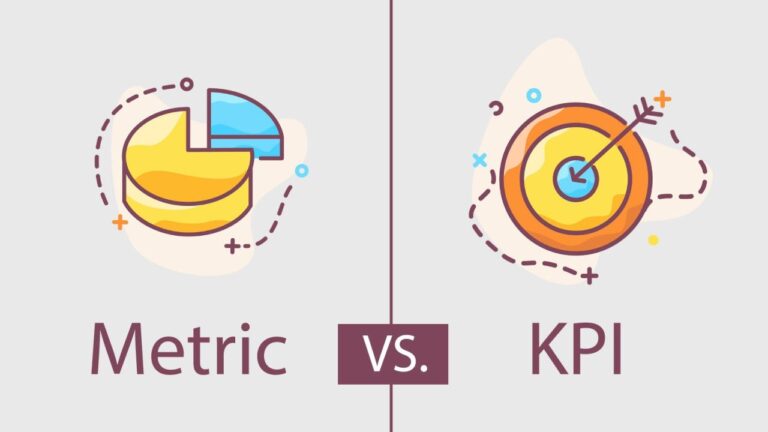
Metrics vs. Key Performance Indicators (KPI’s): What Business Transformation Leaders Need to Know
In the fast-paced world of business transformation, data is your compass. But not all created data points are equal. Two terms often used interchangeably are